Bethel (Yup’ik: Mamterilleq) is the largest western community in Alaska off the road system with 6,000 residents, and is a predominantly Yu’pik community with 85% of the town being Alaska Native people, and less than 9% of the residents identifying as Caucasian. Yu’pik communities have been in this area for many thousands of years, long before the Moravian church started establishing missions in the area in the late 1800’s. The Moravian church and other aspects of colonization have dramatically shaped the deeply rooted culture of Bethel in generations since. Being an outsider to this community, I’m not a good person to effectively speak on the detrimental effects of colonization to this culture, but I did get to learn a lot from people of all backgrounds in Bethel.


In regards to “IndigiQueer” individuals, colonization seemed to lead to the erasure of previously celebrated queer identities, as Christian values replaced and merged with the values of Alaska Natives. While Two Spirit identities and other alternate gender identities are now very slowly coming back into the open, I got the sense that 2SLGBTQ+ people here in Bethel still need to stay relatively hidden, in order to thrive and exist peacefully.


As I started the networking process in Bethel, one of my first interactions was with someone on social media who I thought might be telling me off. At least the initial subtext I got from her message was perhaps warning me off. I puzzled over her initial message, as I started to fill her in on my project more, and attempted to provide some reassurance that I wasn’t intending to exploit any 2SLGBTQ+ Native people who might be open to meeting with me. She was a socially progressive white person who had adopted Bethel as her home more than 20 years ago. She shared that she was quietly queer … and felt no need to put it out in the open. I asked if she would be willing to meet for coffee, with no pressure to be part of the photo project – I just wanted to learn more about her community and experiences. This ended up being a really fun meet-up at the end of my trip, and ultimately concluded that she was just lovingly protective of her quiet, insulated, yet welcoming and kind community.


Being cued in to the much more private nature of sexuality and gender here, this was the first place I visited where I started putting out the option of sharing written stories with no photos or more discrete photos. I reached out to some new online contacts who were from this area, and they gave me the social media profiles of their friends of queer friends. A couple of those local queer individuals I contacted thanked me for doing this project, gave me suggestions for places to visit in town, and politely said they were not comfortable talking openly about their queer identities.
Explore more of these journeys – All the Genders is becoming a book.
Follow the Kickstarter prelaunch page to carry it forward.


I ended up spending a chunk of my time here with contacts from the Tundra Women’s Coalition, an organization that helped organize the town’s first pride event with Teens Acting Against Violence only a couple years ago. One of my email contacts here, met me with a beaming grin that was reflective of the warm, welcoming manner that many people in the town had greeted me with in passing interactions. While the community overall can be kind and welcoming, she said that she had recently started learning more about some of the tough experiences queer people have in her community. She described recently having the opportunity to sit in on a program with the local radio station interviewing LGBTQ+ members of her community. She pulled in a shaky breath, before saying that it was “eye opening” and did not realize how dangerous it was to be visible for many queer locals here.


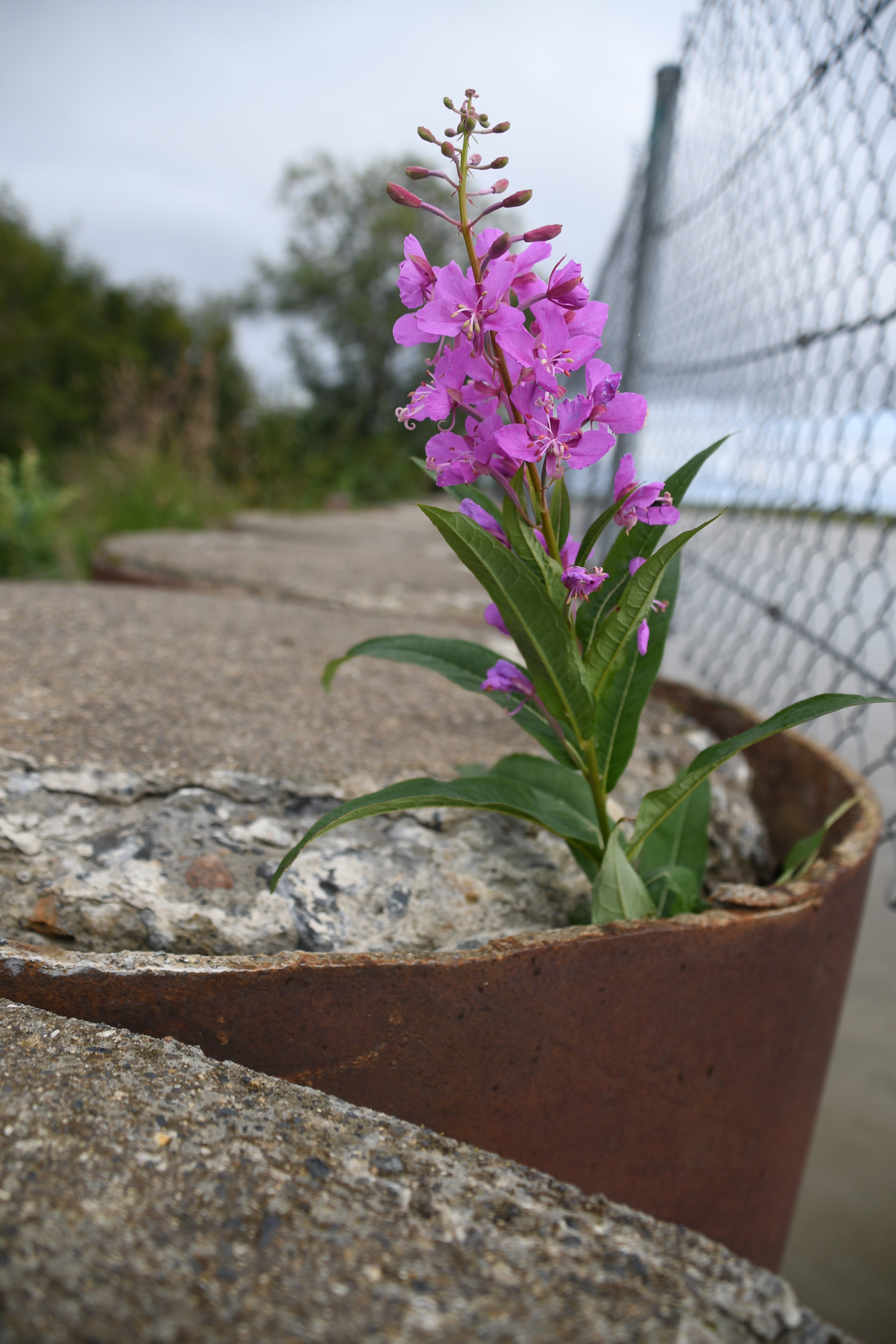
A trans, non-binary person I had met earlier in the summer worked part time in a partner organization here, and further described the dynamics for 2LGBTQ+ people here. “If you’re not white or white passing, you’re much less likely to be out and accepted in your community here.” My new friend was a white “outsider” who felt comfortable being visible here, and while I was there they led a discussion group on gender identity for an inclusive young adult group. For the most part, the teens seemed more interested in getting to the popcorn and movie of the day, but they also didn’t blink twice at my friends’ presence and expression as a non-binary individual. A few put some extra thought into how their masculine or feminine features were expressed via clothing and personality. The day before, I also got to join in the group’s activity of making fireweed jam … we messed up something in this science experiment though and it ended up being more of a purple sugar water, but was fun nonetheless to join in making a local delicacy from the flowers that coated the tundra.


Another person, an LGBTQ Ally, I met and photographed here, invited me to her home to share dishes for dinner that were native to her culture. She noted that she didn’t normally invite people into her home, but was trying to be more open to new connections. I was grateful for the opportunity to learn more about her culture, and meet the large group of family members visiting her home from another village. Her cousin had four young children under the age of 6, two of them with significant physical disabilities. A recurring topic of conversation that day was the strong pressure she felt to have more children, after deciding to cap her own small family at one child. That evening, she had whale meat (muktuk) on the menu for dinner, a commonplace dish in Alaska Native cultures. I hid my disappointment when she shared with embarrassment that they forgot to start thawing it out that day, but still enjoyed the invite as we snacked on traditionally cured salmon and exchanged stories.


The only queer person I met here who was comfortable being part of the photo project, was a younger adult who almost described having nothing else left to lose. Bethel was a place where they felt much more comfortable as a queer person, than the small village they had grown up in. To me, it sounded like they had already been through so much in their young life. To them, they were just describing things that are tragically commonplace to the lives of Alaska Natives, to include suicide and alcoholism. If you’re visibly queer, you might throw a lot of bullying and harassment into this intergenerational trauma mix. They met me for photos after taking care to apply beautiful, sparkling make-up. On the 20 minute walk over to their photo location of choice, I watched them startle, then duck their head and hide their beautiful face as a small group of men crossed the road a distance away. They muttered quietly, “everyone here is fine, people are good, but they may not understand … when I was in the village life was bad.”
Explore more of these journeys – All the Genders is becoming a book.
Follow the Kickstarter prelaunch page to carry it forward.


During my stay, someone forwarded me a podcast interviewing a Yu’pik Elder in Bethel on 2SLGBTQ+ issues. The Elder told a story that conveyed the importance of all seasons, and of all animals that thrive in each of the seasons. You can’t just take out one season, or one animal because you don’t like it … the whole system will collapse. She likened it to the LGBTQ+ community: “If we accept them, we will not destroy them. …. They don’t need to be under a shadow, they don’t need to be hiding.” The host took this to mean that people shouldn’t be in the closet. The Elder concluded with saying “we are One, One people,” emphasizing the importance of unity in their community, while also allowing everyone to exist as they are.


Bethel’s Nickname – Not Alaska’s Premier Tourist Destination
I heard more than a few Alaskans refer to Bethel as the “armpit of Alaska.” Perhaps unfair, but could see how this reputation came about, as I spent hours trudging along the shoulders of muddy roads (Bethel does have the highest number of cab drivers per capita in the world, but hey, I was trying to save money for the insanely priced groceries here!) The tourist infrastructure was … nearly nonexistent, unless I was looking in the wrong places. The landscapes are gray and gloomy at first glance, until you take a walk out on the tundra and examine the abundance of berries and flowers on the ground. Property owners here are also in a constant battle to maintain homes and buildings that are battered by the wind, snow, melting permafrost, and the rising river.

The town is nestled in the heart of the second largest wildlife refuge in the U.S., the Yukon Delta NWR. It’s known as a home to some of the largest concentrations of waterfowl in the world – a birder’s paradise! When I got there though, I found it nearly impossible to explore much off the road with having few local connections and minimal tourist infrastructure in place. Initially, I thought maybe my main tourist activity could be springing some money for a boat charter up the river for birdwatching. I had no such luck as I walked to addresses for businesses that no longer existed, and called phone numbers that were no longer in service. I managed to catch staff at the wildlife refuge headquarters during their limited hours, and they looked at me like I had two heads when I asked about how to get out on the remote wildlife refuge.


Climate Change in Bethel
On days 3-5 of my stay, a storm was hitting town, and the homeowners of the room I was renting started fretting as the small river on the edge of their lawn rose higher than normal, expanding to three times its starting size in 2 days and engulfing their dock and the edge of their yard. They started discussing whether they needed to move their vehicles into garages that were more than 15-20 feet off the ground on either side of the elevated house. The family educated me on what they needed to do to maintain their home here, which included spending several thousand dollars every 3-5 years to re-level the home. They said it used to be every decade or more. Accelerating climate change is making life in these towns noticeably harder.


Early in the summer I learned about some of Alaska’s native towns that were literally disappearing and being engulfed by the effects of climate change. Not only do Alaska Natives have tough and grueling histories of colonization, but they are also being considered some of the world’s first climate refugees. As I sat inside looking at the downpour and rising river, my heart felt heavy for these communities as I learned about the many challenges that they’ve adapted to as everyday life. My biggest problem on this short trip would just be keeping my feet dry without proper footwear to walk the waterlogged roads that threatened to suction the sneakers off my body!


Check out more of my QueerVentures in Alaska here.
Thank you for being here and joining me on this journey!
August 2023


Leave a Reply